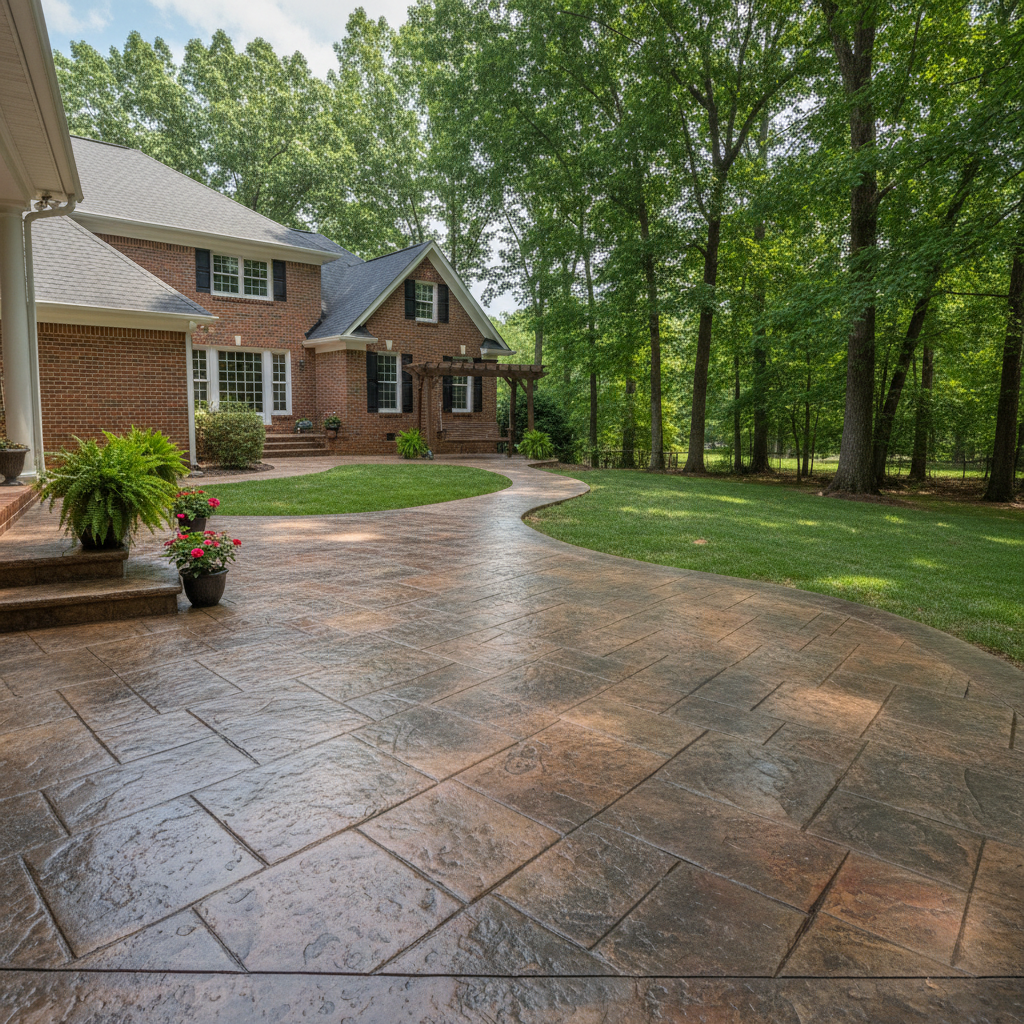
You want your patio or driveway to look good, right? Not just functional, but something that really adds curb appeal and lasts a long time. That's exactly where decorative concrete comes in – whether it's stamped, stained, or exposed aggregate, it truly elevates a space. But here in Jackson, TN, our weather isn't always the easiest on concrete, especially the fancy stuff. So, let's talk about what that means for your decorative concrete project, from when to schedule it to how to keep it looking sharp for years.
Timing Your Decorative Concrete Project in Jackson
When's the best time to pour decorative concrete around here? It's a question I get a lot, and for good reason. The short answer? Spring and fall are usually your best bets. Why?
Concrete needs to cure properly, and that process is heavily influenced by temperature and humidity. If it's too hot, it dries too fast, which can lead to cracking and a weaker surface. Too cold, on the other hand, and the hydration process slows way down. This means it takes forever to strengthen, and it can even freeze before it's strong enough, causing major damage. We're talking about the kind of damage that means ripping it out and starting over, and nobody wants that, do they?
In Jackson, our summers get brutal. July and August can see temperatures consistently in the high 90s, sometimes even over 100 degrees, with humidity so thick you can practically swim through it. Pouring decorative concrete in those conditions is tough. We *can* do it, but it requires a lot more effort to control the curing process – things like adding retarders, misting, covering, or working at dawn. It just adds complexity and potential for issues if it's not managed perfectly. Plus, working with decorative finishes like stamping or staining in that kind of heat is just plain harder to get a consistent, beautiful result.
Winter's got its own challenges. While we don't get super harsh winters like folks up north, we definitely see freezing temperatures, especially overnight. If the concrete freezes before it reaches a certain strength, it's compromised. We're very careful about pouring when temperatures are expected to drop below 40 degrees Fahrenheit within the first 24-48 hours. It's simply not worth the risk.
So, that leaves spring and fall. The sweet spot is when daytime temps are consistently between 50 and 80 degrees. That gives the concrete enough warmth to cure well, but not so much that it dries out too quickly. You'll get the best finish and the strongest slab this way. If you're thinking about a decorative concrete project, plan ahead to get on our schedule for those prime months.
Weather's Impact on Decorative Finishes
It's not just about the pour itself; the weather really impacts how decorative finishes turn out. Stamped concrete, for example, relies on the concrete being at just the right consistency for us to press those patterns in. Too wet, and it won't hold the pattern. Too dry, and we can't get the stamps in deep enough. Temperature and humidity directly affect that consistency, as you might imagine.
Stains and sealers are also sensitive. If it's too humid, stains might not penetrate evenly, and sealers can get cloudy or even peel. If it's too windy, sealers can dry too fast, leading to an uneven coat. We're always checking the forecast, not just for rain, but for temperature, humidity, and wind speed, before we even think about applying a decorative finish. We've seen firsthand how a sudden pop-up shower over a fresh stain can ruin a job, even in the middle of a sunny day.
Protecting Your Decorative Concrete Investment Year-Round
Once you've got that beautiful decorative concrete from JM Jackson Moore Concrete, you want to keep it looking that way, right? Here's how to protect your investment, especially with our Jackson climate:
- Seal it, and re-seal it: This is probably the most important thing you can do. Sealers protect against moisture, stains, and UV damage. For decorative concrete, especially stamped or stained, you'll want to re-seal every 2-3 years, sometimes more often if it's high-traffic or exposed to a lot of sun. It's like waxing your car – it keeps it looking new and protected.
- Clean it regularly: Just like any other surface, dirt, leaves, and grime can build up. A simple sweep and occasional wash with a mild detergent and water will do wonders. Avoid harsh chemicals or pressure washers set too high, as they can damage the sealer or even the concrete itself.
- Watch out for de-icers: This is a big one for our area. Many de-icing salts contain chemicals that can aggressively attack concrete, especially new or decorative concrete. If you absolutely have to use something for ice, look for products labeled as concrete-safe, usually those with calcium chloride or magnesium chloride. Better yet, just use sand for traction.
- Mind the freeze-thaw cycles: We get a fair share of these in Jackson. Water seeps into tiny pores in the concrete, then freezes and expands, causing stress and potential spalling (that's surface flaking). A good sealer helps prevent water penetration, which is why re-sealing is so crucial.
- Address cracks early: Even with the best pour, concrete can crack. It's just the nature of the material, unfortunately. If you see a crack, especially if it's getting wider or water is getting into it, get it looked at. Small cracks are always easier and cheaper to repair than big ones.
Taking care of your decorative concrete isn't rocket science, but it does require a little attention, especially with the weather swings we experience here in West Tennessee. A little preventative maintenance goes a long way in keeping your investment looking fantastic for years to come.