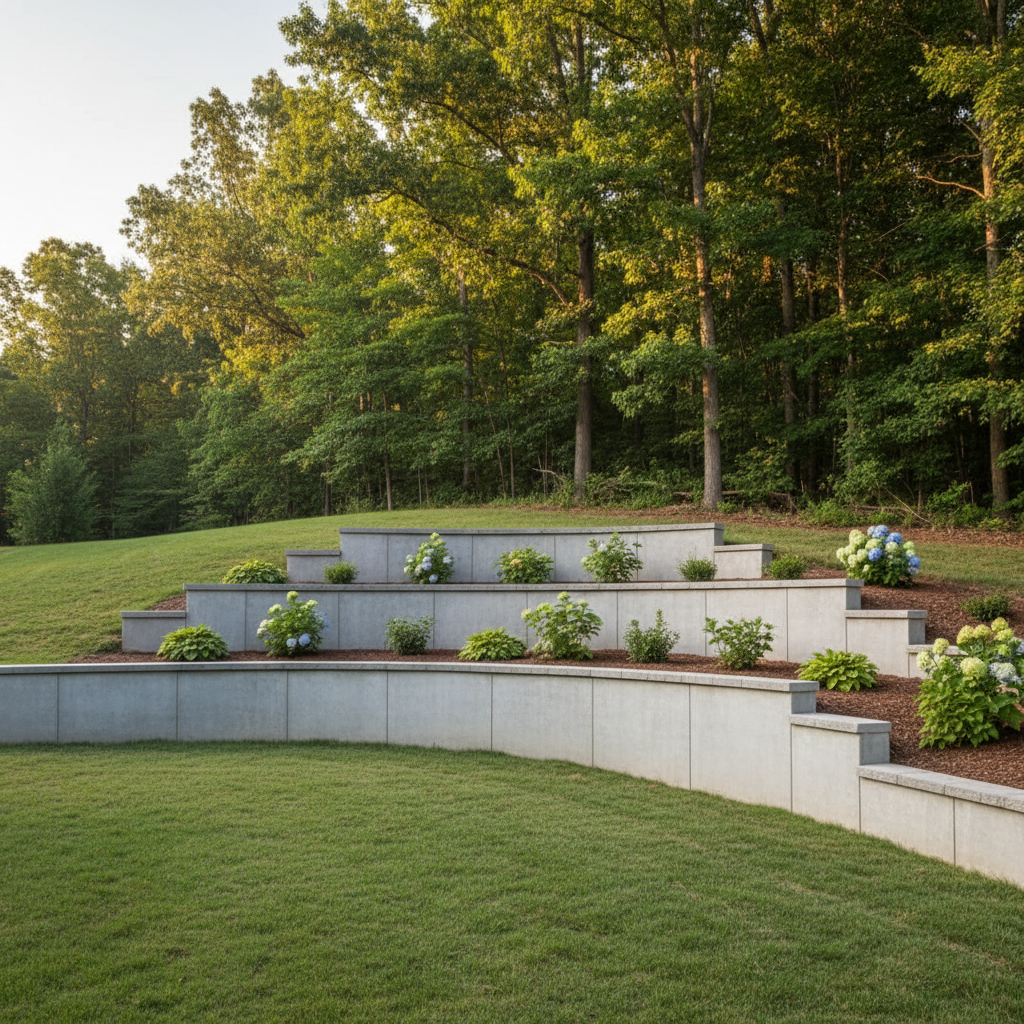
Ever driven past a yard in the Jackson area and noticed a retaining wall that is starting to lean or bow out toward the street? It is a sad sight, and it usually means someone spent a lot of money on a structure that is about to fail. JM Jackson Moore Concrete gets calls all the time from people needing us to tear out and replace walls that were put in just a few years prior. A retaining wall is not just decorative landscaping. It is a heavy-duty structural element holding back tons of earth, and cutting corners on the planning or hiring side is a recipe for total regret.
Ignoring Jackson's Stubborn Clay Soil
If you live around Madison County, you already know what our dirt is like. It is heavy, dense clay that holds onto moisture like a sponge. When it rains hard—which happens plenty around here—that clay gets saturated, swells up, and exerts massive hydrostatic pressure against whatever is holding it back. One of the biggest mistakes homeowners make is letting a contractor backfill a new wall with that same native clay. You have to use clean, free-draining gravel behind the wall. If you do not give trapped water a clear path to escape through weep holes or a perforated drain pipe, the sheer weight of the wet clay will push the wall right over.
Skipping the Proper Base and Footing
A retaining wall is only as solid as what is sitting underneath it. Some fly-by-night operators or do-it-yourselfers will dig a shallow trench, tamp down a little dirt, and start stacking blocks or pouring concrete right on top. That is a massive mistake. In our region, ground movement from seasonal moisture shifts will cause a shallow foundation to shift, settle, and crack. A proper wall requires excavating down to stable subgrade, pouring a reinforced concrete leveling pad or crushed stone base compacted in strict lifts, and burying the first course or two below grade. If your contractor tries to skip the heavy lifting at the bottom, tell them to pack their tools.
Failing to Check Height Limits and Engineering Requirements
Not all retaining walls are created equal, and height matters tremendously. People often assume they can just build a four-foot or five-foot wall wherever they want in their backyard to flatten out a slope. In many cases, once you start getting past three or four feet of retained height, the lateral load demands professional engineering oversight. If a contractor tells you they do not need geogrid reinforcement, tie-backs, or an engineered design on a taller wall just to save you a few bucks, run the other way. Local building codes exist for a reason, and ignoring them will catch up to you when you try to sell your home.
Going With the Lowest Bid Without Asking the Hard Questions
Everyone loves saving money, but accepting the cheapest bid for a concrete or block retaining wall is usually how homeowners end up paying twice. When you are vetting local contractors, ask them specifically how they handle drainage, what kind of base material they use, and whether they provide a workmanship warranty. If they look at you blankly when you mention geogrid or gravel backfill, they do not know the first thing about building a structure that will outlast a heavy Tennessee thunderstorm. JM Jackson Moore Concrete provides Retaining Wall services for homes in Jackson, TN.