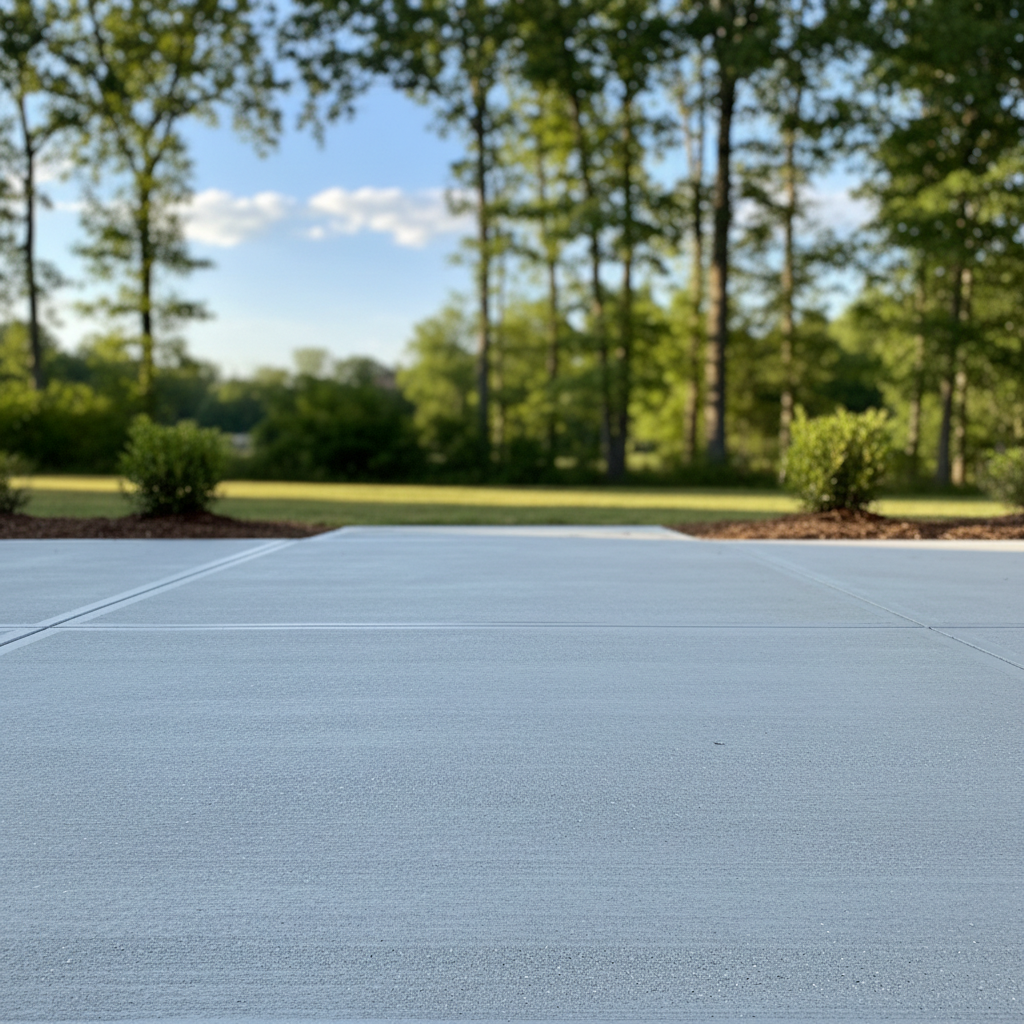
Let us talk about Concrete Installation. We get many questions from homeowners around Jackson, TN, about new Concrete Installation projects. This is a big investment for your home. You will want to make sure it is done correctly. Asking questions is smart. Here is what we tell people when they are looking to get new Concrete Installation done.
How long does Concrete Installation actually take?
This is one of the first things people ask us. This is a good question. You are wondering how long your yard will be a construction zone. For most residential Concrete Installation jobs, like a new concrete driveway or a concrete patio, the actual installation process usually takes us from 1 to 3 days. This includes the site prep as well as the pouring as well as the finishing. Our team knows that if it is a bigger, more complex Concrete Installation job, it could take 3 to 7 working days. This might happen with some fancy curves or a tricky grade. Things like the size of the Concrete Installation project as well as the design complexity as well as the weather can all affect the timeline.
The concrete is not ready for full use right after we pack up. It needs time to cure. You can usually walk on new concrete after 24 to 48 hours. You will need to keep cars off a new concrete driveway for at least 7 days. Sometimes this can be up to 10 days. For heavy vehicles or full strength, you are looking at about 28 days. Rushing this part of the Concrete Installation process can cause real problems later on. Patience is important for your new concrete.
What is the deal with expansion joints? Do I really need them?
You absolutely need expansion joints. Think of concrete like it is breathing. It expands when it is hot as well as shrinks when it is cold. Here in Jackson, we have hot, humid summers. We also have occasional cold snaps. That movement is important for the concrete. Expansion joints are small gaps that we put in the concrete. These gaps let it move freely without cracking itself apart. Expansion joints are especially important where your new concrete meets another structure. This could be your house foundation as well as an existing slab. Without expansion joints, you are asking for stress cracks. This could also cause potential damage to your concrete or even your home's foundation.
How thick does my concrete need to be?
This is not a one-size-fits-all answer. There are some general rules for Concrete Installation. For sidewalks and patios that mostly see foot traffic, 4 inches is usually good. For a residential concrete driveway, where you will have cars driving over it, we typically recommend 4 to 5 inches. If you have heavier vehicles, like an RV or a big truck, or if you are dealing with softer, clay-heavy soil around Madison County, then 5 or 6 inches is a much better idea. That extra inch adds a surprising amount of strength. It can add up to 50% more strength. It is important to make sure your concrete can handle the load without cracking or settling over time.
Should I use rebar or wire mesh for reinforcement?
This is a common debate in Concrete Installation. Both rebar and wire mesh have their place. Wire mesh is good for crack control in lighter-duty concrete slabs. This would be for a standard patio or sidewalk. It helps hold the concrete together if it does crack. This keeps those smaller cracks from spreading. Rebar provides more structural strength. This is especially true for thicker concrete slabs or areas that will bear heavier loads. A concrete driveway is an example of this. Rebar is better at handling the stresses from vehicles. It can also give you more peace of mind. Sometimes, JM Jackson Moore Concrete will even use both rebar and wire mesh. We might also use a combination of rebar in high-stress areas as well as fiber reinforcement mixed into the concrete itself. It depends on the specific Concrete Installation project. It also depends on what kind of use that concrete will get.
What is the best time of year to install concrete in Jackson?
You want to hit that good spot with the weather for Concrete Installation. The ideal temperature range for pouring concrete is usually between 50°F and 85°F. Here in Jackson, that means spring and fall are generally your best options. The mild temperatures let the concrete cure properly. You also avoid the extreme heat of summer. Extreme heat can make the concrete dry too fast. This can lead to cracks. You also want to avoid pouring when it is too cold. This is especially true if there is a risk of freezing. Freezing can affect the curing process. It can also cause damage. JM Jackson Moore Concrete always checks the forecast. We look for a few days of consistent, dry weather after the pour.
How much does new Concrete Installation cost in Jackson, TN?
This is a common question. The cost of Concrete Installation can vary a lot. Generally, you are looking at anywhere from $4 to $20 per square foot. In Jackson, TN, specifically, we have seen average costs for things like a 4-inch reinforced concrete patio around $5.07 per square foot. Concrete sidewalks are a bit more at $5.63 per square foot. Concrete driveways can be in that same range. Again, it depends on the thickness as well as the reinforcement. Our team at JM Jackson Moore Concrete can give you a clear estimate.
What makes the price change? It is things like the size and thickness of the concrete slab. It is also how much site preparation and excavation we need to do. The type of reinforcement as well as any decorative finishes you might want also affect the price. Access to the job site can also be a factor. The best way to get an accurate number for your Concrete Installation project is to get a detailed quote from a local contractor like JM Jackson Moore Concrete. We will come out to your home. Our team will take a look at the project. We will give you a solid estimate so you know exactly what to expect.
What do I need to do to maintain my new concrete?
You have made a good investment with your new Concrete Installation. You will want to protect it. Concrete is tough. It is not maintenance-free. Here is what you should be doing for your concrete:
- Keep it clean: Sweep your concrete regularly. This gets rid of dirt as well as leaves as well as debris. A good cleaning with a hose and a stiff brush, or even a pressure washer on a low setting, once or twice a year will keep it looking fresh.
- Seal it: This is an important step. You should reseal your concrete every 2 to 3 years. Sealing helps prevent stains. It also stops moisture from getting in. This is important with our freeze-thaw cycles in Jackson. Sealing also extends the life of your concrete.
- Clean spills fast: Oil as well as rust as well as leaves can all stain concrete. You need to clean them up as soon as you notice them. Use a concrete-safe cleaner.
- Watch for cracks: Small cracks can become big problems. If you see any cracks, get them repaired quickly. You can use a concrete caulk or filler.
- Avoid harsh chemicals: Do not use salt or chemical de-icers. This is especially true in winter. They can damage your concrete. Use sand for traction instead.
Taking care of your concrete is not hard. It will make a big difference in how long it lasts. It will also make a difference in how good it looks.